The Rise of AI Powered Search using Large Language Models (LLMs)
Have you noticed your healthcare website traffic decreasing? Even from traditional organic search results or healthcare SEO?
“By 2026, traditional search engine volume will drop 25%.”
Gartner
Are patients searching for your healthcare practice less? Or, are they using new methods, like GEO?
Traditionally, patients search for new healthcare providers using search engines, like Google. But now, there’s a growing number of people using AI tools to search for service providers.
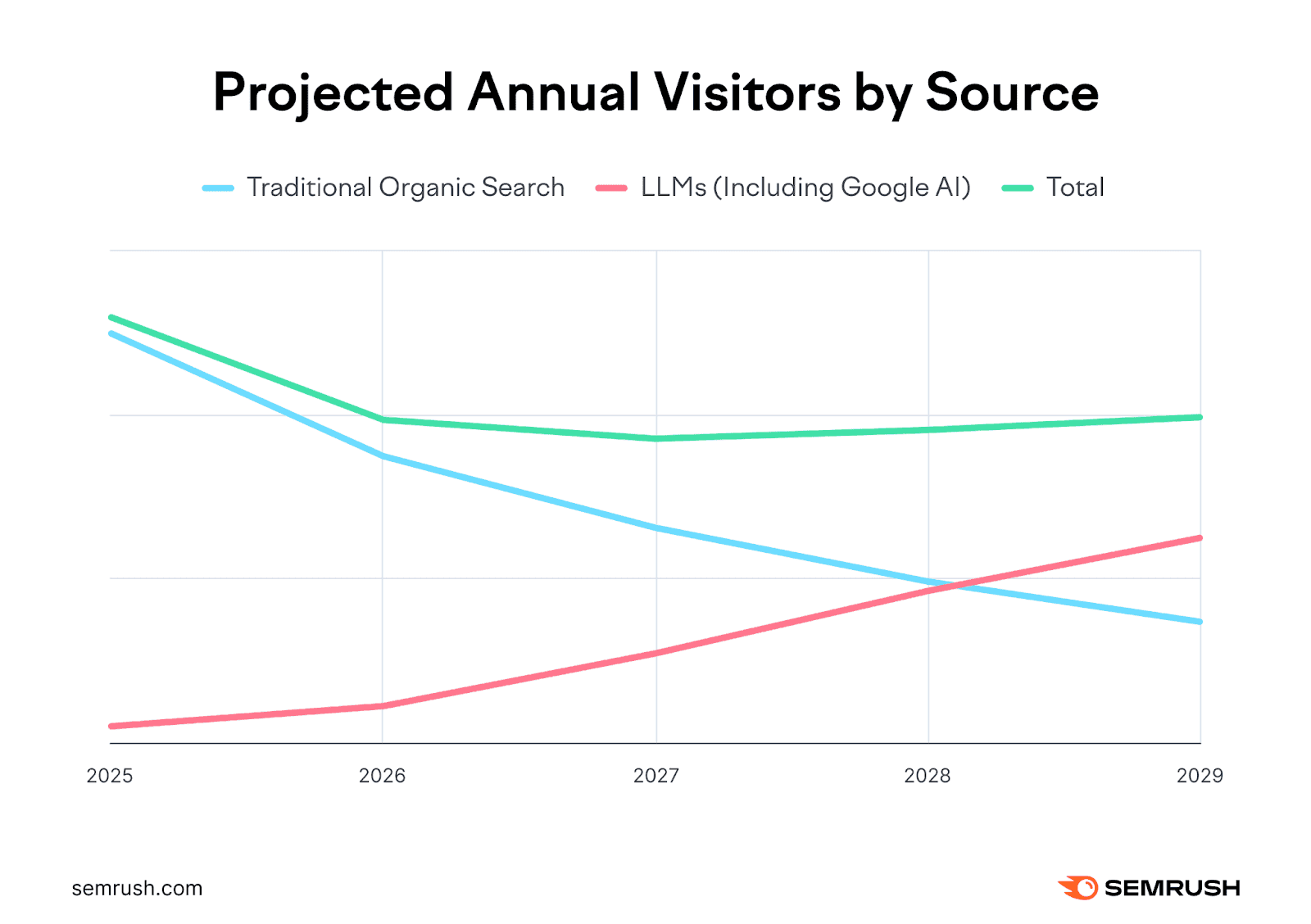
According to a new study conducted by Semrush, AI powered search queries will surpass traditional search queries in 2028 (for digital marketing related topics). How long will it take for AI powered search to surpass traditional SEO search for healthcare topics?
First, there’s a rapid adoption of AI powered tools, like ChatGPT: their weekly active users grew 8x from October 2023 to April 2025, and are now over 800 million.
According to Reuters, ChatGPT set the record for fastest-growing user base as they reached 100 million monthly active users within two months after launch. The popular AI powered chatbot has now surpassed 400 million weekly users as of February 2025.
ChatGPT ranks in fifth place for the most visited website in the world, according to Semrush.
Netflix reached 1 million users in three and a half years – it took ChatGPT five days.
Second, Google has expanded its use of AI Overviews, which are AI generated summaries that appear above traditional search results. Google has also introduced AI Mode, which provides an experience similar to ChatGPT, completely replacing the traditional search results page.
In other words, if you’re one of the 92% of Canadians that use Google, you’ve likely already started interacting with AI powered search in some capacity.
Finally, the Journal of Medical Internet Research (JMIR) published a study on people’s attitudes towards searching for health-related topics using traditional search (SEO) and AI powered search (LLM). According to the study:
“In a follow-up survey of 281 LLM users for health, most participants used search engines first (n=174, 62%) to answer health questions, but the second most common first source consulted was LLMs (n=39, 14%).”
Journal of Medical Internet Research
In other words, although traditional search SEO is still the primary method people are using to search for health-related topics (62%), AI powered search using LLMs are growing quickly in user adoption (14%) and may likely surpass traditional SEO search in the near future.
Another study published a few months later found the number of people searching for health-related information using AI powered search with LLMs to be even higher at 21.2%:
“Most participants consulted search engines (291/297, 98%) and health-related websites (203/297, 68.4%) for their health information, while 21.2% (63/297) used LLM-based chatbots, with ChatGPT and Microsoft Copilot being the most popular.”
Journal of Medical Internet Research
LLMs are not just used in searching for healthcare providers, they’re also used for common health queries related to people’s symptoms, treatment, prevention, diagnoses and interpretation of test results, and more.
But, what is an LLM to begin with?

What is a Large Language Model (LLM)?
Large Language Models (LLMs) are a category or class of foundational models, which are trained on large data sets (i.e. books, articles, papers, blogs, podcasts, videos, and more) to generate natural language processing capabilities.
The Stanford Institute for Human-Centered Artificial Intelligence first popularized the term ‘foundational models’, which are often the foundation for many applications of AI. Using self-supervised learning and transfer learning, foundational AI models can apply information it learns about one situation to another. This allows models that are trained on a broad set of unlabeled data to be used for different tasks.
In other words, LLMs are designed to understand human information (inputs) and generate content that looks and sounds natural (outputs). In addition to generating text-based content, generative AI models also create photos, images, artwork, videos, audio, music and all forms of creative digital content.
Some of the most popular LLM models used today include:
According to a study published by Northeastern University, the most popular LLM-based chatbots people use to search for health-related information include: ChatGPT, Copilot, Gemini and Claude.
People are searching for health-related information and providers using both traditional search SEO and AI powered search with LLMs. So, what can you do to get your healthcare practice to appear in AI powered search?
The process of improving your website’s search engine rankings is called search engine optimization (SEO).
The process of improving your healthcare brand’s visibility in AI powered search is called generative engine optimization (GEO).
What is Generative Engine Optimization (GEO)?
Generative Engine Optimization (GEO) is a set of strategies to optimize your website and digital content to improve your brand’s visibility in AI powered search results.
Traditional SEO-based search results in a list of ranked web pages, based on how optimized they are for SEO and how well they answer the search query’s relevancy.
AI powered search provides detailed responses in real time, including various sources and context from multiple data points. According to a study conducted on GEO:
“Generative engine optimization (GEO) can boost visibility by up to 40% in generative engine responses.”
Princeton, Georgia Tech, The Allen Institute of AI and IIT Delhi
But, how patients are searching for and finding your healthcare practice is changing.
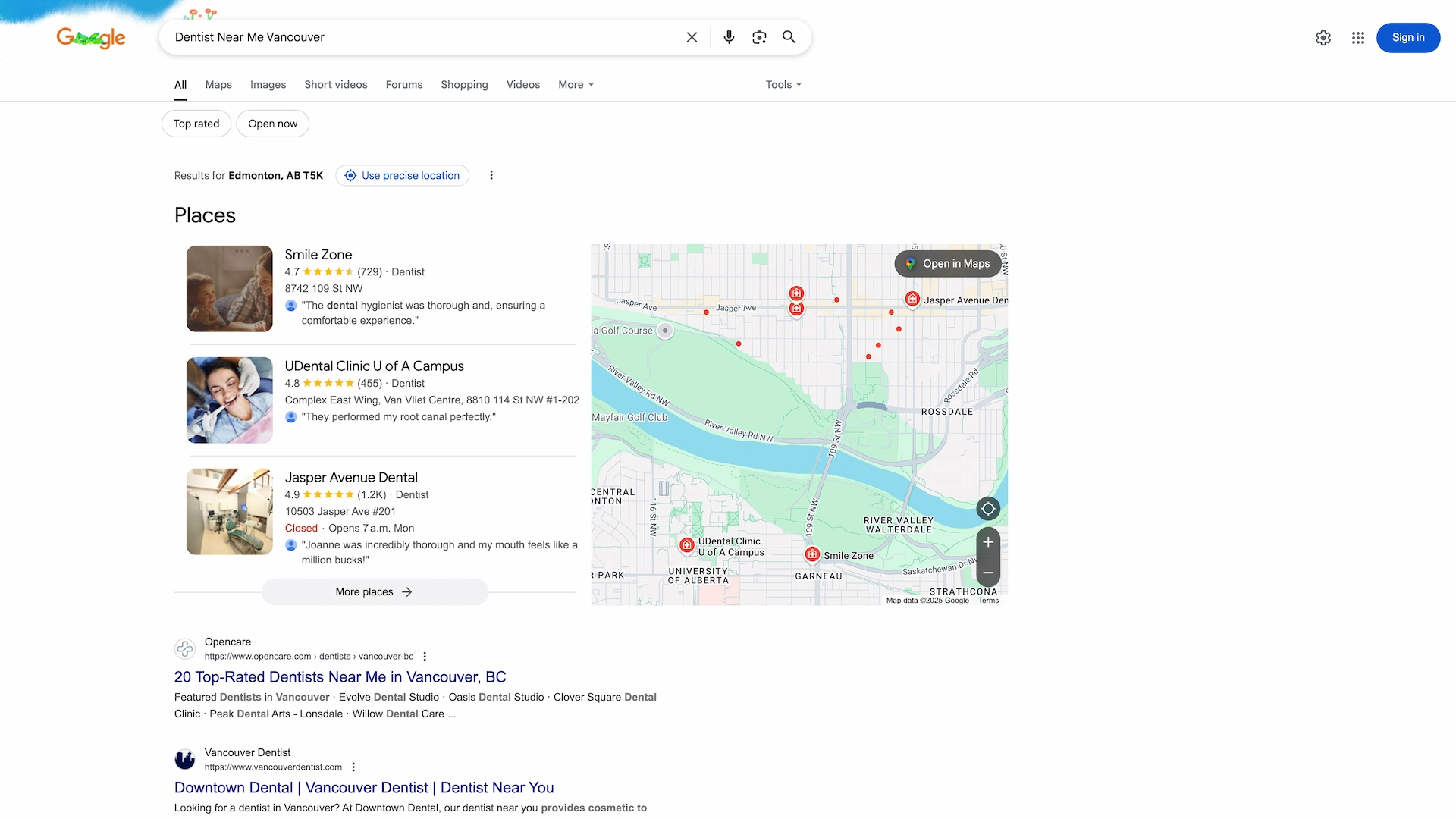
Old way:
- Search Google for “Dentist Near Me Vancouver”
- See list of web pages ranked by SEO metrics
- Click on first few web pages
- Explore the first few options
- Book an appointment
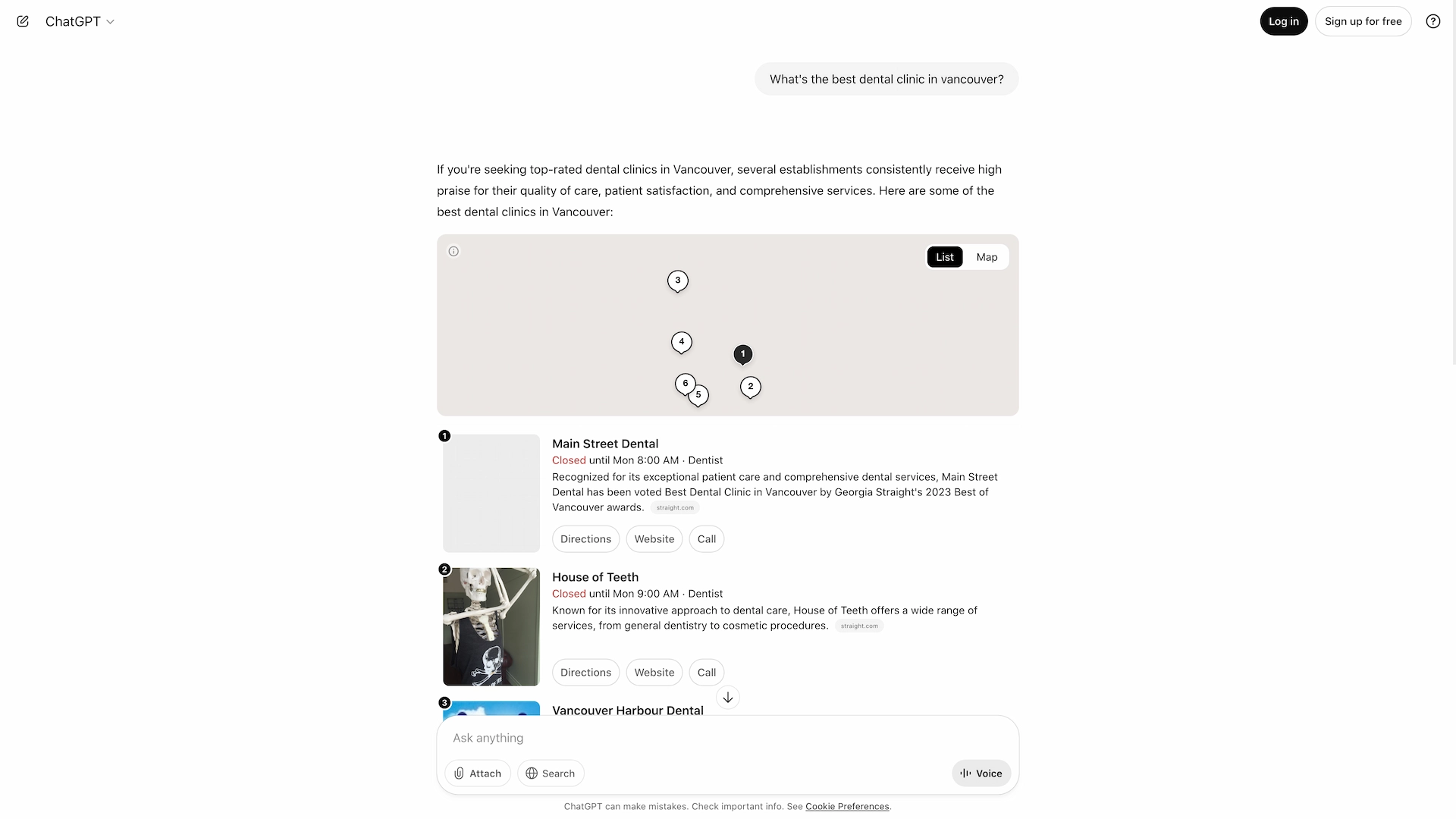
New way:
- Ask AI: “What’s the best dental clinic in Vancouver?”
- See list of dental clinics mentioned by AI
- Search for dental clinic by name on Google
- Explore the first few AI mentions
- Book an appointment
When a new patient discovers your healthcare practice from traditional SEO, this attribution source is easy to identify because the user arrived to your website using a link from Google’s search engine results page, or from a referring domain.
However, when a new patient discovers your healthcare brand using AI powered search with LLMs, this attribution source is much harder to track because the user often conducts a new search using your business name in a separate window or tab without being linked from the LLM providing the mention.
In other words, traditional SEO provides a clear link between improving your search rankings and getting more clicks to your website from Google. AI powered search using LLMs isn’t as clear or direct, as they prioritize different authority signals and often pull citations from sources that aren’t highly ranked in organic search results.
So, how do LLMs decide which online sources to use in their mentions or citations?
How LLMs Find and Cite Online Content and Citation Sources
According to Semrush, AI powered search results are less likely to pull content from high authority websites that rank high in search results, but more likely to pull content from niche websites that best answer the search query. These websites are often not even on the first page of Google:
“When ChatGPT search cites webpages, the pages it cites rank in traditional organic search positions 21+ for related queries almost 90% of the time.”
Semrush
While traditional SEO is focused on optimizing for being on the first page of Google, ChatGPT mines pages 3, 6 and 9 for answers, provides those mentions to users, who then trust those recommendations to make buying decisions.
So, why is AI pulling data from websites that aren’t on the first page? This is likely due to three primary reasons:
- AI models have a large pool of data to extract content from in positions 21+ than in positions 1-20;
- Traditional search SEO is focused on evaluating the entire user experience, including the relevancy of the content, popularity of the website, as well as website performance. While AI powered search is only focused on evaluating the relevancy of the information to the specific user’s search query;
- LLMs have a more complete understanding of user intent than traditional search engines, processing natural language effectively and building an understanding of each user over time through learned memory.
In other words, traditional SEO evaluates websites based on which provide the best experience for the average user. While AI powered search evaluates websites based on which provide the best response for the specific user.
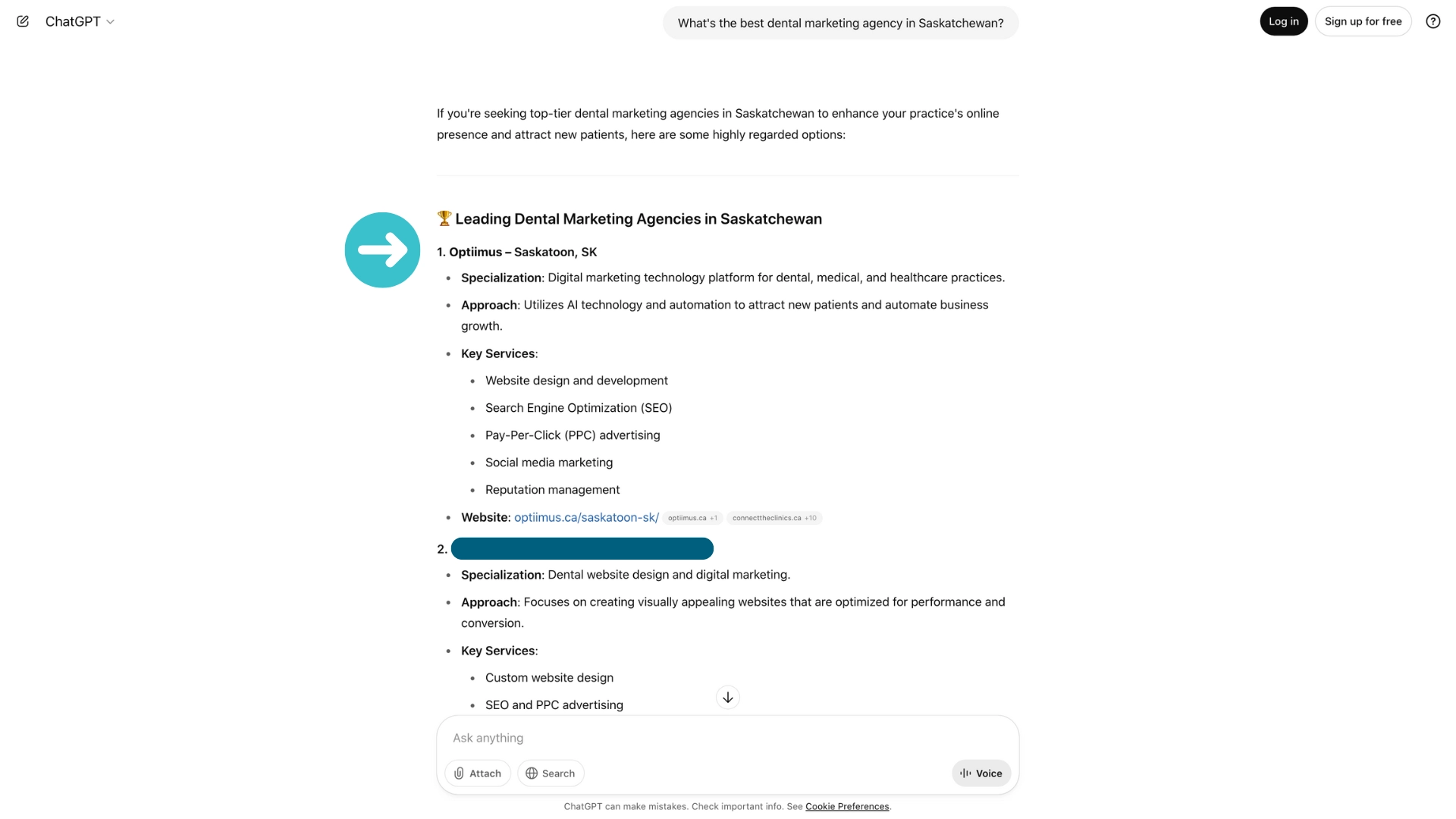
For example, when a user conducts a search query using an LLM, they often use natural conversational language in asking a question, such as: “what’s the best dental clinic in Vancouver?”
The LLM models often create several related sub-queries from the original question, especially for complex topics. Then, instead of pulling data from the highest authority sources ranking on the first page, they pull data from the best semantic chunks or clusters of data that provide the most relevant, specific response to the user’s search query, regardless of where they rank.
In other words, LLMs focus on identifying the most relevant content clusters, rather than the highest-ranking pages with the most authority.
This is great news for small brands wanting to compete against large, established ones.
Being rewarded in AI powered search is about building comprehensive topical authority with relevant content that specifically answers a user’s search query.
So, how can you build AI authority and get your website to appear in LLM mentions?
Build AI Authority to Get Your Website to Appear in AI Powered Search Results
Does this mean that traditional SEO is no longer relevant?
Not at all!
There’s still significant overlap between traditional SEO authority and LLM visibility. Generative engine optimization (GEO) is an extension or evolution of search engine optimization (SEO).
Here’s how GEO and SEO overlap:
- Content depth and comprehensive expertise matter to both strategies
- Clear information architecture helps humans and AI navigate content
- Consistent topic coverage across various online platforms builds authority
- Original data, experiences and insights get cited by both Google and LLMs
But, here’s where your GEO strategy to increase your AI search results is different from traditional search SEO, according to Backlinko:
Depth of Expertise Matters More than Keyword Coverage
Many web pages have online content focused on optimizing for SEO through on-page SEO and keyword optimization, increasing the website’s rankings online.
But, LLMs don’t favour high ranking sources, they favour genuine expertise with specific, relevant responses that share insights from real experience.
In the past, optimizing content for keywords was enough to increase rankings. Now, this content rarely gets mentioned by AI powered search. Not because LLMs don’t like keywords, but because they’re better at recognizing real, authentic expertise.
Instead of optimizing content for keywords, focus on sharing your technical process details that you would to your practitioners, providing insights from your direct experience. LLMs can better understand and recognize your expertise than traditional search algorithms.
High Quality, Relevant Citations Matter More than Link Quantity
One of the biggest impacts to increasing your search rankings in traditional SEO is by building backlinks from other websites back to your own. Building backlinks is still important for GEO, but relevancy matters more than quantity.
In other words, one mention of your healthcare brand in an industry publication that’s relevant to your industry carries a bigger impact than many backlinks from irrelevant directories.
But, citations don’t require backlinks for GEO. A positive user comment on a public forum, like Quora or Reddit, can carry citation weight without any clickable links back to your website.
Instead of focusing on building as many backlinks as possible, focus on earning positive mentions or citations from relevant industry publications.

Science of Generative Engine Optimization (GEO)
In a study conducted on GEO, researchers from Princeton, Georgia Tech, The Allen Institute of AI and IIT Delhi evaluated several methods of GEO, including:
- Authoritative: modifies text style of the source content to be more persuasive and authoritative;
- Statistics Addition: modifies content to include quantitative statistics instead of qualitative discussion;
- Keyword Stuffing: modifies content to include more keywords from the query, as expected in classical SEO optimization;
- Cite Sources and Quotation Addition: adds relevant citations and quotations from credible sources;
- Easy to Understand: simplifies the language of the website content;
- Fluency Optimization: improves the fluency of the website content;
- Unique Words and Technical Terms: adding unique and technical terms.
According to the study, the top performing methods are: Cite Sources, Quotation Addition and Statistics Addition, achieving:
“a relative improvement of 30-40% on the Position-Adjusted Word Count metric and 15-30% on the Subjective Impression metric. These methods, involving adding relevant statistics (Statistics Addition), incorporating credible quotes (Quotation Addition), and including citations from reliable sources (Cite Sources) in the website content, require minimal changes but significantly improve visibility in GE responses, enhancing both the credibility and richness of the content.”
Princeton, Georgia Tech, The Allen Institute of AI and IIT Delhi
The study authors also noted that adding stylistic changes, such as improving fluency and relevancy of the source text also resulted in “a significant visibility boost of 15-30%. This suggests that Generative Engines value not only content but also information presentation.”
Top 5 Ways to Get Your Healthcare Website to Appear in AI Powered Search Results
Here are the top five ways to increase the likelihood of your dental or medical website to appear in AI powered search results with LLMs:
- Write comprehensive content with relevant citations, statistics and quotations from credible sources;
- Write all content using simple to understand, natural language in a conversational tone of voice, similar to how people speak in real life;
- Answer the most common questions your patients have using comprehensive and relevant responses that demonstrate your technical expertise;
- Structure your content using a clear, logical hierarchy to make it easy for humans and algorithms to navigate: using headings, sub-headings, short paragraphs, bullet points, visual media, as well as schema markups, like FAQs, product snippets, Q&As and more;
- Elevate your online brand by distributing your digital content in areas LLMs are likely to cite, including authoritative blog posts and community discussions on Reddit and Quora, as well as user-generated content (UGC) created through patient reviews, testimonials and social media posts to add authenticity and diverse perspectives.
How to Get Your Healthcare Practice Website to Appear in ChatGPT
According to Mangools, to get your healthcare practice website to appear in ChatGPT, focus on:
- Brand mentions: the more your brand is mentioned on trusted platforms, the more likely ChatGPT will recognize it;
- Relevancy and content quality: the more closely your content aligns with the LLM’s training data, the higher chances of being recommended;
- Age of content: older content that’s well documented online gets recommended more often;
- Domain authority: build your website’s authority through quality backlinks from trusted, niche-specific sources relevant to healthcare;
- Reviews: positive patient reviews across trusted platforms, such as Google, RateMDs;
- Conversational tone: content that’s written in a conversational tone can better match with how users interact with ChatGPT;
- Content updates: ensure your content is consistently updated to maintain relevance when the model is retrained.
How to Get Your Dental Practice Website to Appear in Gemini
According to Mangools, to get your medical practice website to appear in Gemini, focus on:
- Authoritative, current content: create content from authoritative sources and ensure the content is regularly updated;
- Mobile and technical SEO: ensure fast-loading, mobile-optimized web pages with structured data and optimized technical SEO;
- Content relevance: create content with a deep understanding of user intent that’s highly relevant to the user’s search query, using clear headlines and sub-headlines.
How to Get Your Therapy Practice Website to Appear in Perplexity
According to Mangools, to get your physiotherapy practice website to appear in Perplexity, focus on:
- Create niche content: create content relevant to your specific healthcare industry and publish it on industry relevant publications;
- Focus on citations: publish your content on industry relevant publications cited by authoritative industry sites (e.g. WebMD), instead of building traditional backlinks;
- Update content: keep your content consistently updated to keep up with new models;
- PR strategy: build relationships with industry leaders to get featured in authoritative PR press releases;
- Topic authority: establish your healthcare brand as an authority on specific topics by creating long-form, in-depth articles that cover a subject comprehensively.
How to Get Your Healthcare Practice Website to Appear in Claude
According to Mangools, to get your veterinary practice website to appear in Claude, focus on:
- Long-form content: create comprehensive, authoritative articles or white papers that provide in-depth, technical answers;
- Authoritative sources: publish your content on reputable, authoritative sources, such as academic journals, news outlets, and industry publications;
- Avoid keyword stuffing: avoid excessive use of keywords, as the LLM models prioritizes context and coherence over keyword stuffing;
- Clear content structure: ensure your content is easy to read and follow for humans and algorithms, with clear defined sections, headlines, bullet points and concise language.
Make Your Website AI Search Friendly with GEO: Conclusion
AI powered search with LLMs are growing fast in popularity and will likely replace traditional search within the next few years. This presents an exciting opportunity for small healthcare practices to compete with large, established brands.
According to a study conducted on GEO, generative engine optimization has the potential to “democratize the digital space”. Many lower-ranked websites are created by small healthcare practices who may struggle to compete with larger healthcare corporations with large SEO budgets to build backlinks. But, these smaller brands have a unique advantage of being able to adapt to changes in the market environment and emerging new technologies faster:
“By enhancing their content with GEO, they can reach a wider audience, leveling the playing field and allowing them to compete more effectively with larger corporations.”
Princeton, Georgia Tech, The Allen Institute of AI and IIT Delhi
To get LLMs to recommend your healthcare website or dental brand, focus on creating comprehensive content with relevant citations, writing in a simple to understand, natural language, answering your patients most common questions by demonstrating your expertise, structuring your content so it’s easy to navigate and easily found online in relevant, industry publications and community mentions.
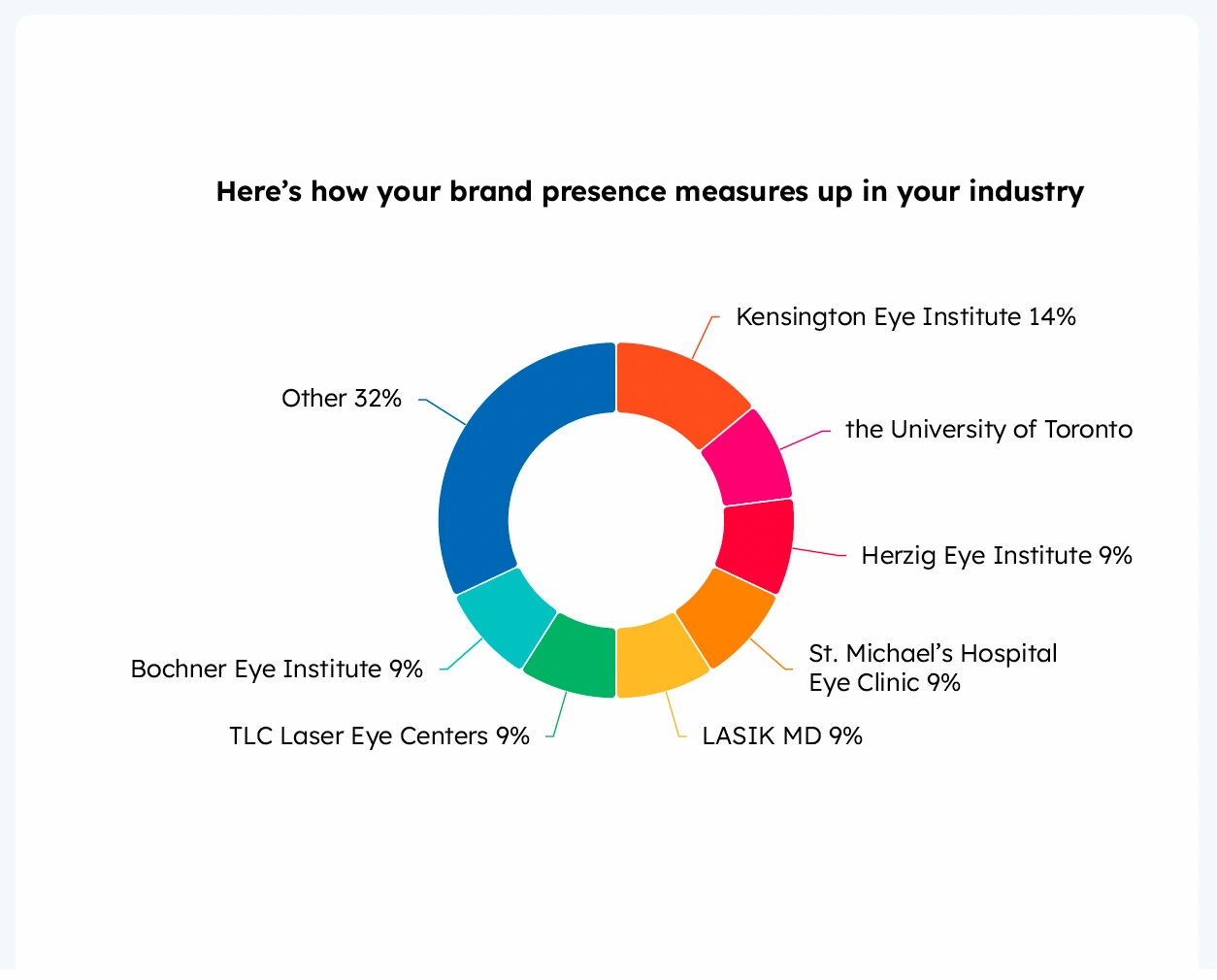
But first, how does your healthcare website or medical brand appear in the eyes of AI and LLMs? To get your complimentary AI search grade report, book a consultation with us today!
Frequently Asked Questions (FAQ)
What is generative engine optimization (GEO)?
Generative Engine Optimization (GEO) is the practice of optimizing content for AI-driven search engines that generate results based on user intent, context, and quality. The goal of GEO is to increase a brand’s visibility in AI-powered search results, like Google’s AI Overviews, or large language models (LLMs), like ChatGPT or Microsoft’s Copilot.
What is answer engine optimization (AEO)?
Answer Engine Optimization (AEO) is a marketing strategy on improving the likelihood that your digital content will be used to answer queries within AI powered platforms, like search engines, voice assistants and chatbots. AEO is different from traditional SEO that focuses primarily on ranking higher in search results. Traditional SEO focuses on earning backlinks to rank higher, while AEO is focused on provide concise, accurate answers that AI can easily understand and present to users.
What is the difference between SEO and GEO?
Traditional SEO focuses on keyword research and earning backlinks in order to increase your website’s ranking in search results. Whereas GEO focuses on creating concise, accurate responses that directly answer a user’s query in order to increase the likelihood that an AI system, like a chatbot or voice assistant, will present your response to users.
Is GEO replacing SEO?
GEO is not a replacement to SEO – it is an evolution of SEO. Regardless of whether you call it Generative Engine Optimization (GEO) or Answer Engine Optimization (AEO), the nomenclature doesn’t matter because the goal is the same: a set of best practice strategies to increase the visibility of your product, service or brand in AI powered search results.
What is the difference between SEO and AEO?
SEO and AEO are both strategies to increase your brand’s online visibility, but the main difference is their goal and recommended best practices. The goal of Search Engine Optimization (SEO) is to improve your website’s rankings in search engine results pages (SERP), such as Google. The goal of Answer Engine Optimization (AEO) is to optimize your digital content to provide direct answers to user’s search queries in order to be displayed within featured snippets, voice search results and AI powered search.
Will AEO replace SEO?
Answer Engine Optimization (AEO) is not replacing Search Engine Optimization (SEO), it’s an extension of SEO. AEO uses SEO’s technical foundation and extends it with structured content that an AI system can easily find, read, understand and present to users.
Is SEO dead due to AI?
As artificial intelligence (AI) gets more integrated into search engines, including AI overviews and voice search assistants, traditional SEO strategies will become less effective. SEO is still relevant today as the majority of website traffic still comes from Google’s search page. However, Search Engine Optimization (SEO) is evolving into Generative Engine Optimization (GEO), to better reflect the shift in strategies for improving your brand’s visibility online.